


 Abraham Bosse - Man Singing and Playing a Lute - mid to late 17th century
from $27.99
Hoodie

Abraham Bosse - The Banquet of the Rich Man - mid to late 17th century
Garment
Hoodie
from $27.99
Ships within 3–7 business days. Free shipping to U.S. addresses.
Bulk offer: any 3 items 10% off, 5 items 20%, 10 items 30%. Applied automatically in the cart.
- Free shipping on all U.S. orders. Flat-rate international shipping: $19.99 USD.
- Made to order. Orders are processed and shipped within 3–7 business days.
- Damaged or misprinted? Free replacement. Report it within 30 days of delivery. Refund & return policy
About this design
Abraham Bosse - The Banquet of the Rich Man - mid to late 17th century - Hoodie
This fine etching by Abraham Bosse stages the biblical parable of the Rich Man and Lazarus as a scene of lavish feasting set against a beggar waiting at the door.
Visual Elements & Composition
The image is built entirely from grey and black line work on an off-white ground, with grey dominating most of the surface. Crisp copperplate engraving renders the tapestry-hung interior, the leaded windows and the banquet table in dense hatching. At the centre, the rich man feasts while seated guests in plumed hats crowd the table. A servant boy holding a covered cup stands near the table, and Lazarus waits at a doorway on the edge of the room. Lines of French verse run through the plate, including "O que de Riches miserables," which pushes the scene toward commentary.
Meaning & Symbolism
The parable is a warning about wealth without compassion. The abundance inside the room sits against the hunger outside it, and the distance between the two is the point of the picture. Bosse produced this work in seventeenth-century France, when Calvinist and moralist writers urged viewers to measure their conduct against scripture. He was known for documenting social costume and interiors, and here he turns that eye toward moral instruction, translating a familiar story into images that anyone could read.
Worn Across the Chest
A hoodie carries its design on the front of the body, so this etching reads as the viewer's own vantage point, looking into a crowded interior from the doorway where Lazarus stands. The horizontal scene spreads across the torso, and the hood frames the upper edge of the banquet, placing the wearer inside the composition. Worn outdoors, the print invites the same question the parable asks: who is inside, and who is left waiting outside.
Same design, other garments
More like this
-
Abraham Bosse - Man Singing and Playing a Lute - mid to late 17th century
from $27.99
Hoodie
-
 Abraham Bosse - A Courtier Following the Recent Edict - mid to late 17th century
from $27.99
Hoodie
-
 Abraham Bosse - Allegory of America, from The Four Continents - mid to late 17th century
from $27.99
Hoodie
-
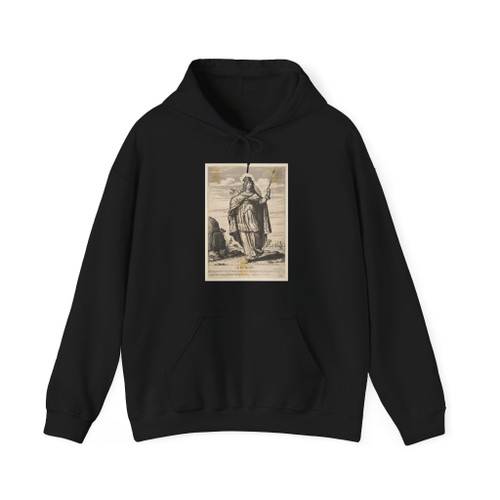 Abraham Bosse - Allegory of Europe, from The Four Continents - mid to late 17th century
from $27.99
Hoodie
-
 Abraham Bosse - Allegory of Africa, from The Four Continents - mid to late 17th century
from $27.99
Hoodie