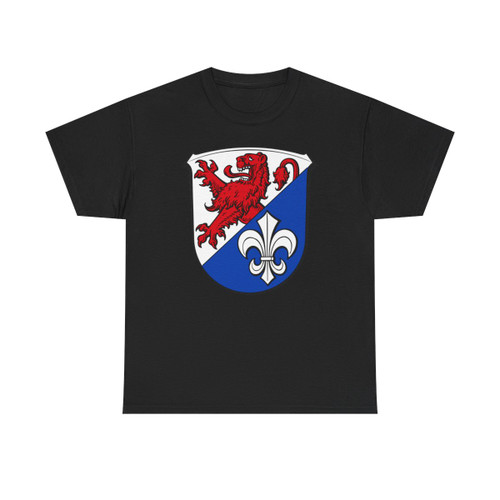
CoA Bavaria 1806 (Germany) T-Shirt Design
This t-shirt showcases the historical Coat of Arms of Bavaria from the year 1806, a heraldic emblem representing the dawn of the Kingdom of Bavaria. The design is a striking visual statement, rich with symbolic meaning.
Key Design Elements
The central feature is the iconic Bavarian shield, dominated by a pattern of white-and-blue lozenges. This fusilly pattern, composed of diagonal diamonds, is the enduring symbol of Bavaria and the Wittelsbach dynasty, the ruling family during that era. The pattern fills the main field of the shield, serving as a visually captivating backdrop.
At the heart of the design, a smaller, central shield (an inescutcheon) is displayed. This shield is divided, showcasing two important historical emblems. One half features the Reichsapfel, or imperial orb, a symbol of the Elector-Arch-Steward office held within the Holy Roman Empire. The other half displays the Palatine lion, representing the Electoral Palatinate, a significant territory and historical connection for the Wittelsbachs.
Above the shield rests the Royal Crown of Bavaria, representing the kingdom's newly acquired status and sovereignty.
The shield is traditionally flanked by two heraldic lions, positioned as supporters. One lion holds a scepter, symbolizing royal authority, while the other holds a sword, representing justice. These flanking lions add to the design's sense of regality and historical importance.
Symbolism and Meaning
The design is a powerful embodiment of Bavarian heritage and the transition to a kingdom. The white and blue lozenges are the defining visual of Bavaria and the Wittelsbachs. The Reichsapfel and Palatine lion reflect Bavaria’s role in the Holy Roman Empire and its dynastic ties to the Palatinate.
The overall composition is a proud testament to Bavaria's history and its emergence as a kingdom in the Napoleonic era, offering a direct link to a pivotal moment in Bavarian history.