Coat of Arms of Borger-Odoorn Hoodie: A Symbolic Tapestry
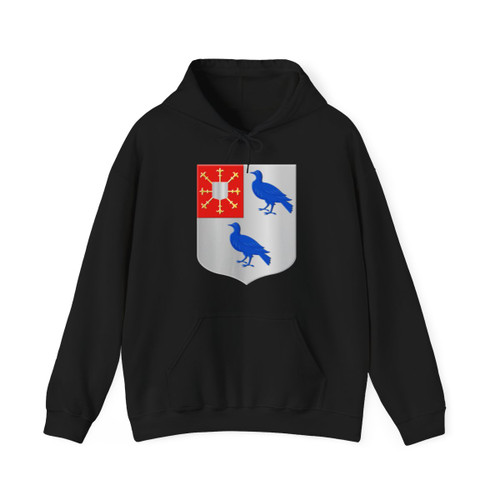
This hoodie showcases the official coat of arms of Borger-Odoorn, a municipality in the Netherlands, a design rich in history and local significance. The artwork presents a compelling visual representation of the area's heritage and landscape, meticulously designed according to heraldic principles.
The Shield: A Landscape in Miniature
At the heart of the design lies the shield, a canvas of black (sable) that provides a striking backdrop. A prominent gold (or) chevron, a diagonal stripe, cuts across the shield, symbolizing the Hondsrug, a significant ridge of higher ground that defines the area's geography. Above this, a gold wooden bog-spade with raised edges, a traditional peat-digging tool known as a boezelschup, points to the historical importance of peat cutting in the region's development.
Below the chevron, a gold stylized hunebed (megalithic tomb) is depicted, representing the many prehistoric stone burial sites. This connection highlights the ancient heritage of the Funnelbeaker culture that once thrived in the area, offering a glimpse into the region's deep past.
A Crown of Honor and Equestrian Legacy
The shield is crowned with a golden crown of three leaves and two pearls, a symbol of civic honor and status. Flanking the shield are two silver horses, serving as supporters, emphasizing the agricultural character of Borger-Odoorn and the region's equestrian traditions. These horses wear black mural (castle-like) collars, referencing a local legend about the town of Hunsow, and the purported destruction of it, represented by the color black.
Colors and Meaning
The design's color palette is carefully considered. The black and gold colors pay homage to the former municipalities that merged to form Borger-Odoorn. The gold also represents the peat and sandy soils that shape the region's landscape.