COUWENBERGH: A Study in Power and Violence
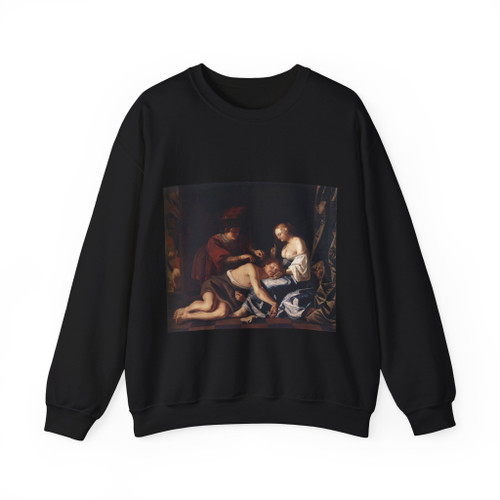
This crewneck design presents a stark visual representation of Christiaen van Couwenbergh's controversial artwork, "Three Young White Men and a Black Woman." The artwork, originally painted in 1632, depicts a scene of profound power imbalance, centering on a Black woman struggling against the forceful actions of white men.
Visual Narrative
The core of the design features the central figures: a naked Black woman, depicted in distress and struggle, held captive by one of the white men. The composition emphasizes the woman's vulnerability and the men's dominance. A second white man stands nearby, his gaze directed at the viewer, perhaps inviting complicity. A third man, positioned to the side, seems to express shock. The scene, framed by the interior of a domestic space, highlights the unsettling dynamics of race, gender, and sexual control.
Symbolism and Meaning
The artwork serves as a potent symbol of historical power dynamics. The stark contrast between the pale skin of the white men and the dark skin of the woman underscores the racial hierarchy prevalent in the era. The depiction of sexual violence is a clear demonstration of the historical exploitation of Black bodies. The inclusion of everyday domestic elements like the chamberpot juxtaposes these moments of violence within a domestic scene, further amplifying the disturbing nature of the work.
The design forces a confrontation with the darker aspects of art history, prompting reflection on the legacy of slavery, racism, and sexual exploitation that permeated early modern European society. This garment is a conversation starter about the intersection of art, history, and the often-uncomfortable realities of the past.