DEU Augsburg COA 1811 (Germany) T-Shirt Design
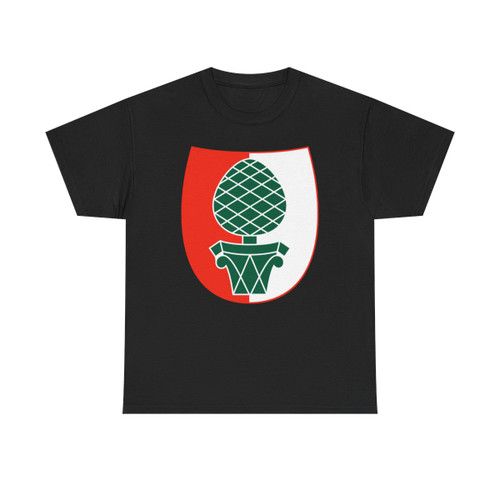
This t-shirt showcases the historic coat of arms of Augsburg, Germany, as officially defined in 1811. The design is a bold heraldic statement, rich in symbolism and visual impact.
Visual Description
The central element of the design is the shield. It is divided vertically, creating two distinct halves. The left side (dexter) is rendered in a vibrant red (heraldic gules), and the right side (sinister) is represented in a clean white or silver (heraldic argent). Atop the shield, centered, sits a striking green pine cone (Zirbelnuss), a stylized representation of the local emblem.
The pine cone itself rests upon a golden capital, the top of a column, which adds a touch of architectural elegance and reinforces the sense of civic strength.
Symbolism and Meaning
The coat of arms is steeped in local history. The red and white colors of the shield reflect the heritage of the Prince-Bishopric of Augsburg, linking the design to long-standing heraldic traditions of the region. The pine cone, or Zirbelnuss, is a key element in Augsburg's identity, symbolizing the city's civic strength, which replaced an earlier design of grapes. The golden capital serves as a pedestal for the pine cone, adding a sense of dignity and reinforcing the design as a symbol of the city's authority.
Overall, the design proudly displays the historic civic identity of Augsburg, combining the regional colors, the unique heraldic device, and architectural symbolism, celebrating the city's legacy.