


 Heraldry
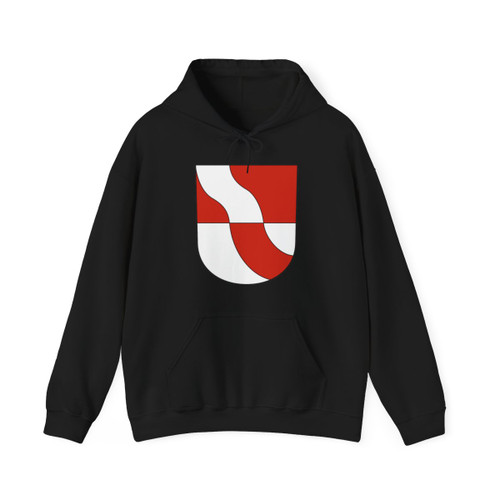
KradolfSchönenberg-blazon (Switzerland) (Coat of Arms)
from $27.99
Hoodie

Heraldry
Duebendorf-blazon (Switzerland) (Coat of Arms)
Garment
Hoodie
from $27.99
Ships within 3–7 business days. Free shipping to U.S. addresses.
Bulk offer: any 3 items 10% off, 5 items 20%, 10 items 30%. Applied automatically in the cart.
- Free shipping on all U.S. orders. Flat-rate international shipping: $19.99 USD.
- Made to order. Orders are processed and shipped within 3–7 business days.
- Damaged or misprinted? Free replacement. Report it within 30 days of delivery. Refund & return policy
- Material
- 50% Cotton, 50% Polyester. Heather Sport colors: 40% Cotton, 60% Polyester.
- Production
- Printed using Direct-to-Garment (DTG) technology for vibrant, lasting designs.
- Origin
- Printed in the USA on imported garments (Bangladesh).
About this design
Duebendorf-blazon (Switzerland) (Coat of Arms) Hoodie: Design Overview
This hoodie features the official Coat of Arms of Dübendorf, a municipality in the canton of Zürich, Switzerland. The design is a striking representation of heraldic tradition and local history.
Design Elements and Symbolism
The artwork is divided into two distinct halves, reflecting the structure of the original coat of arms. The upper portion, rendered in a deep azure blue, showcases a golden (Or) unicorn's head in profile, rearing upwards. The unicorn symbolizes the historical presence and influence of the Free Lords of Tengen, a prominent family in the region.
The lower half of the design presents a field of six vertical stripes, alternating between silver (Argent) and red (Gules). This pally (striped) pattern represents the Free Lords of Regensberg, and signifies their feudal influence over Dübendorf. The alternating colors provide a dynamic visual contrast, creating a bold and memorable design.
Historical Context
This design, officially adopted in 1926, is not merely a decorative element. It's a carefully crafted representation of Dübendorf's history, reflecting the influence of key historical figures and families that shaped the region. It speaks of the legacy of the Free Lords and the unique identity of Dübendorf.
Same design, other garments
More like this
-
Heraldry
KradolfSchönenberg-blazon (Switzerland) (Coat of Arms)
from $27.99
Hoodie
-
 Heraldry
Kyburg-blazon (Switzerland) (Coat of Arms)
from $27.99
Hoodie
-
 Heraldry
Toess-blazon (Switzerland) (Coat of Arms)
from $27.99
Hoodie
-
 Heraldry
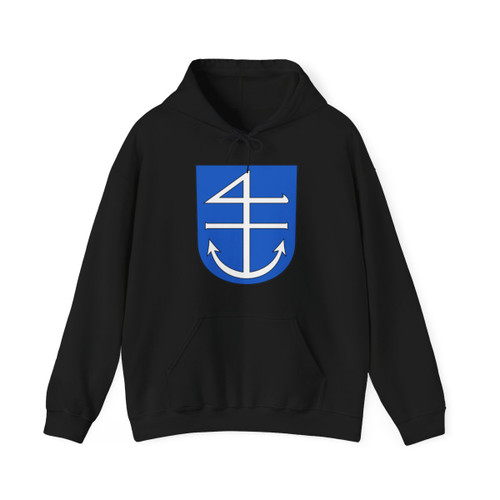
Uttwil-blazon (Switzerland) (Coat of Arms)
from $27.99
Hoodie
-
 Heraldry
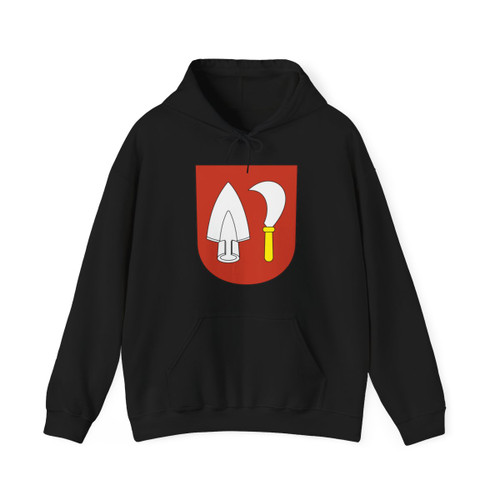
Unterengstringen-blazon (Switzerland) (Coat of Arms)
from $27.99
Hoodie