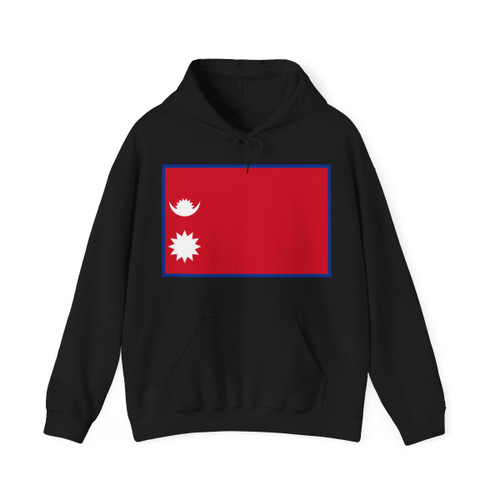
Flag of Nepal 1743-1962 (Nepal)
from $27.99
Hoodie
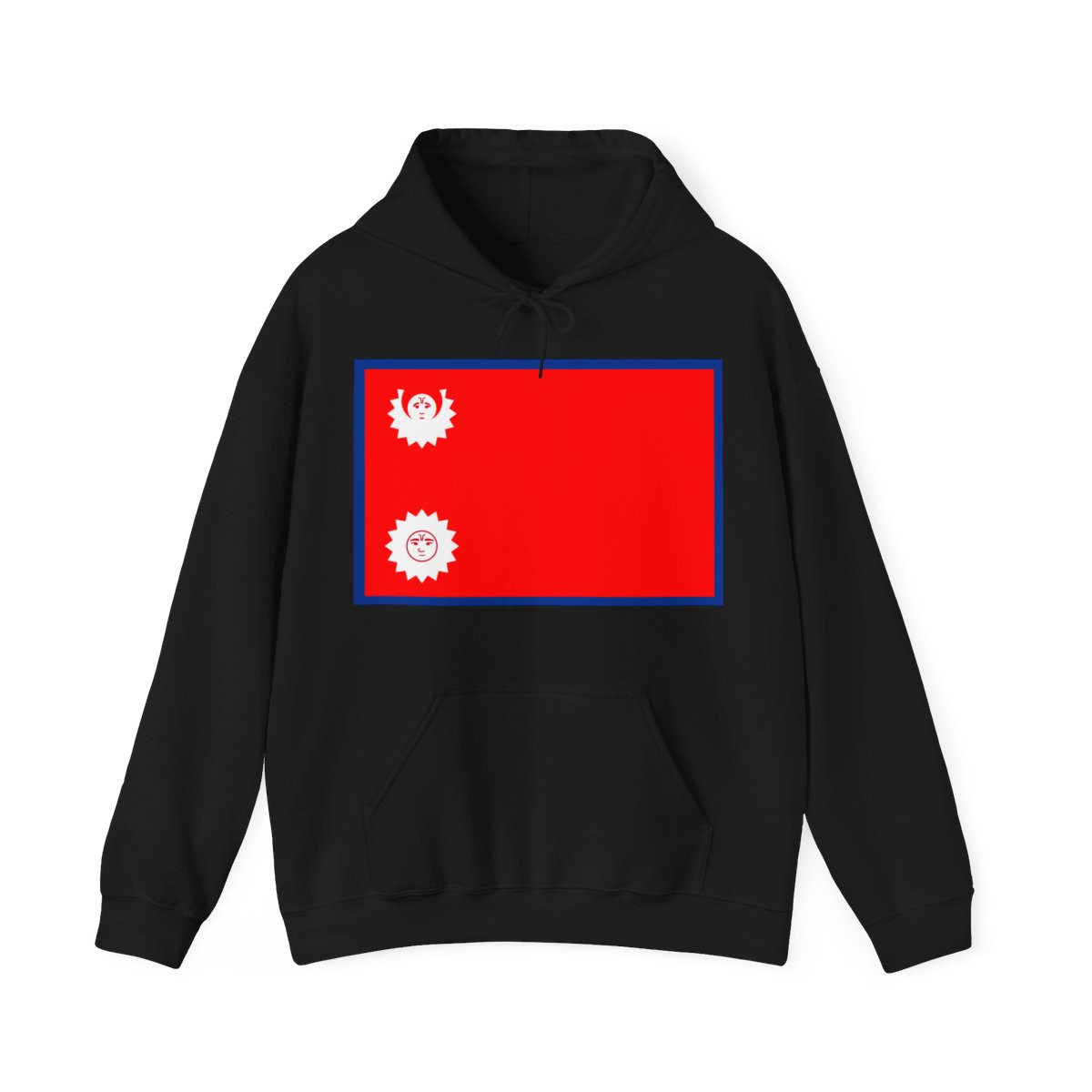
Flag of Nepal rectangular 1930-1962 (Nepal)
Garment
Hoodie
from $27.99
Ships within 3–7 business days. Free shipping to U.S. addresses.
Bulk offer: any 3 items 10% off, 5 items 20%, 10 items 30%. Applied automatically in the cart.
- Free shipping on all U.S. orders. Flat-rate international shipping: $19.99 USD.
- Made to order. Orders are processed and shipped within 3–7 business days.
- Damaged or misprinted? Free replacement. Report it within 30 days of delivery. Refund & return policy
- Material
- 50% Cotton, 50% Polyester. Heather Sport colors: 40% Cotton, 60% Polyester.
- Production
- Printed using Direct-to-Garment (DTG) technology for vibrant, lasting designs.
- Origin
- Printed in the USA on imported garments (Bangladesh).
About this design
Flag of Nepal Rectangular 1930-1962 (Nepal) Hoodie - Design Description
This hoodie showcases a unique piece of Nepalese history, featuring the rectangular adaptation of the Flag of Nepal used from approximately 1930 to 1962. This design presents Nepal's traditional double-pennon flag, but enclosed within the familiar confines of a rectangle.
Design Elements
The design faithfully recreates the flag's essential visual characteristics. Two adjacent pennons, or upward-pointing triangles, form the central focus. Within these triangles, the sun and moon, celestial symbols of paramount importance to Nepalese symbolism, are prominently displayed.
A crucial detail distinguishes this historical rendition: the sun and the moon each bear a human face. This detail, present on the pre-1962 flag, reflects earlier design traditions and is now a distinct element within this specific historical flag design.
Symbolism
The core symbolism of the design is rooted in its components. The sun and moon, deeply embedded in Nepalese culture, represent longevity and permanence. Their inclusion in this flag design serves to communicate these concepts visually.
The inclusion of the human faces on the celestial bodies is a significant design element. It is representative of earlier design traditions, and represents a link to the historical context of the flag's period.