


 Kaihō Yūsetsu - The Tale of Genji - 17th century v14
from $27.99
Hoodie

Kaihō Yūsetsu - The Tale of Genji - 17th century v7
Garment
Hoodie
from $27.99
Ships within 3–7 business days. Free shipping to U.S. addresses.
Bulk offer: any 3 items 10% off, 5 items 20%, 10 items 30%. Applied automatically in the cart.
- Free shipping on all U.S. orders. Flat-rate international shipping: $19.99 USD.
- Made to order. Orders are processed and shipped within 3–7 business days.
- Damaged or misprinted? Free replacement. Report it within 30 days of delivery. Refund & return policy
About this design
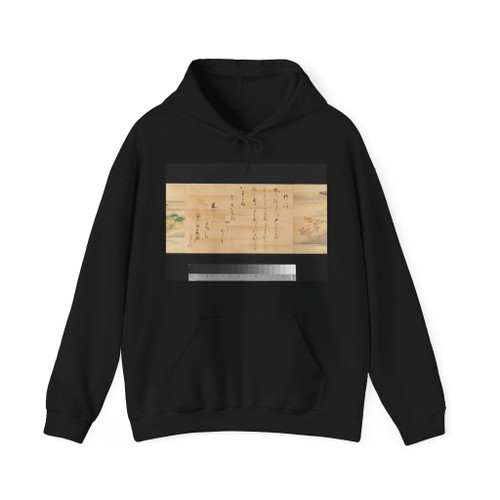
Kaihō Yūsetsu - The Tale of Genji - 17th century v7 - Hoodie
A seated figure rests on a wooden veranda while black ink calligraphy runs across the parchment above a painted garden slope.
Visual Elements & Composition
The panel is long and horizontal, with a scroll-like proportion that keeps the scene low and unhurried. Parchment beige forms the ground, and black ink dominates through the cursive lines of script and the outlines of the veranda. A painted building with a tiled roof sits beside a green slope, and muted green and ochre fill the hillside and the wooden structure. The figure on the veranda is seated in quiet stillness, so the eye settles on the pause rather than on any action.
Meaning & Symbolism
The painted subject draws on The Tale of Genji, the court narrative attributed to Murasaki Shikibu, which follows the life and romances of the courtier Hikaru Genji. Veranda scenes of this kind belong to the novel's refined settings, where characters sit in contemplation of gardens and seasons. The imagery carries the Japanese idea of mono no aware, the awareness of impermanence that runs through the text. The calligraphy, written in the manner of classical literary hand, ties the picture to its literary source. The work is catalogued under the name of Kaihō Yūsetsu, an Edo-period painter whose output included Genji subjects.
Where the Scene Meets the Hoodie
On a hoodie the panel spreads across the front, so the veranda and the seated figure stay in view as the wearer moves. The quiet tones of beige, green and black suit a garment worn for long, unhurried days, and the calligraphy reads as a pattern of lines against the fabric.
Same design, other garments
More like this
-
Kaihō Yūsetsu - The Tale of Genji - 17th century v14
from $27.99
Hoodie
-
 Kaihō Yūsetsu - The Tale of Genji - 17th century v80
from $27.99
Hoodie
-
 Kaihō Yūsetsu - The Tale of Genji - 17th century v114
from $27.99
Hoodie
-
 Kaihō Yūsetsu - The Tale of Genji - 17th century v57
from $27.99
Hoodie
-
 Kaihō Yūsetsu - The Tale of Genji - 17th century v91
from $27.99
Hoodie