Major General Winfield S. Hancock: A Design in History
A Portrait of Valor
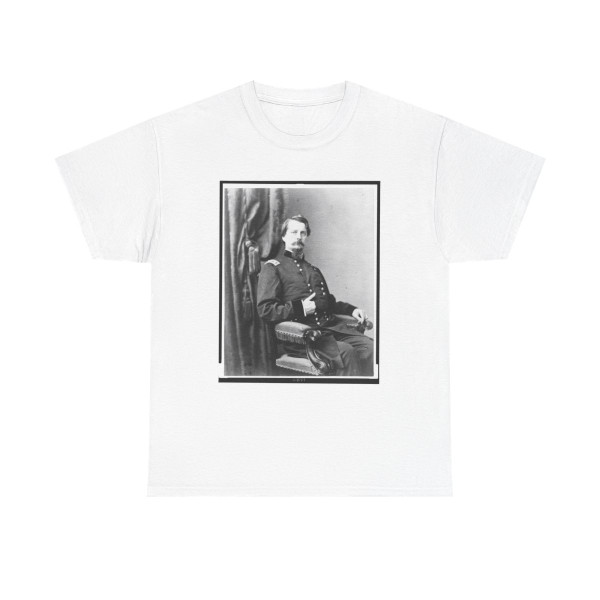
This design presents a meticulously rendered three-quarter length portrait of Major General Winfield Scott Hancock, a commanding figure of the Union Army during the American Civil War. The artwork captures the essence of a formal portrait, a style prevalent during and after the conflict, intended to immortalize military leaders and convey their rank and achievements.
Visual Elements and Meaning
The design, likely based on a photograph or painted image, features Hancock seated, his body visible from the knees up, facing the viewer directly. This "facing front" pose, common in military portraits, allows for direct engagement with the observer, emphasizing Hancock's authority and strength. The focus on his uniform, likely displaying insignia of his rank, such as shoulder straps and stars, communicates his elevated status within the military hierarchy.
The overall presentation likely exudes a sense of gravitas and dignity, fitting for a celebrated officer known for his courageous actions, particularly his instrumental role at the Battle of Gettysburg in 1863. The design subtly hints at Hancock’s leadership and tactical prowess, representing a pivotal figure in American history.
Symbolism of the Era
The design serves as a visual testament to an era of profound conflict and national transformation. The portrait style itself is symbolic, reflecting the importance placed on memorializing leaders and preserving their legacy. It speaks to the values of courage, duty, and resilience, which were central to the Civil War and the men who fought it.