


 Heraldry
Kinnula coat of arms (Finland) (Coat of Arms)
from $19.99
T-Shirt
Heraldry
Pohja.vaakuna (Finland) (Coat of Arms)
Garment
T-Shirt
from $19.99
Ships within 3–7 business days. Free shipping to U.S. addresses.
Bulk offer: any 3 items 10% off, 5 items 20%, 10 items 30%. Applied automatically in the cart.
- Free shipping on all U.S. orders. Flat-rate international shipping: $19.99 USD.
- Made to order. Orders are processed and shipped within 3–7 business days.
- Damaged or misprinted? Free replacement. Report it within 30 days of delivery. Refund & return policy
- Material
- Solid colors: 100% cotton. Heather/Tweed/Russet: 50% cotton, 50% polyester. Sport Grey/Antique: 90% cotton, 10% polyester.
- Production
- Printed using Direct-to-Garment (DTG) technology for vibrant, lasting designs.
- Origin
- Printed in the USA on imported garments (Nicaragua).
About this design
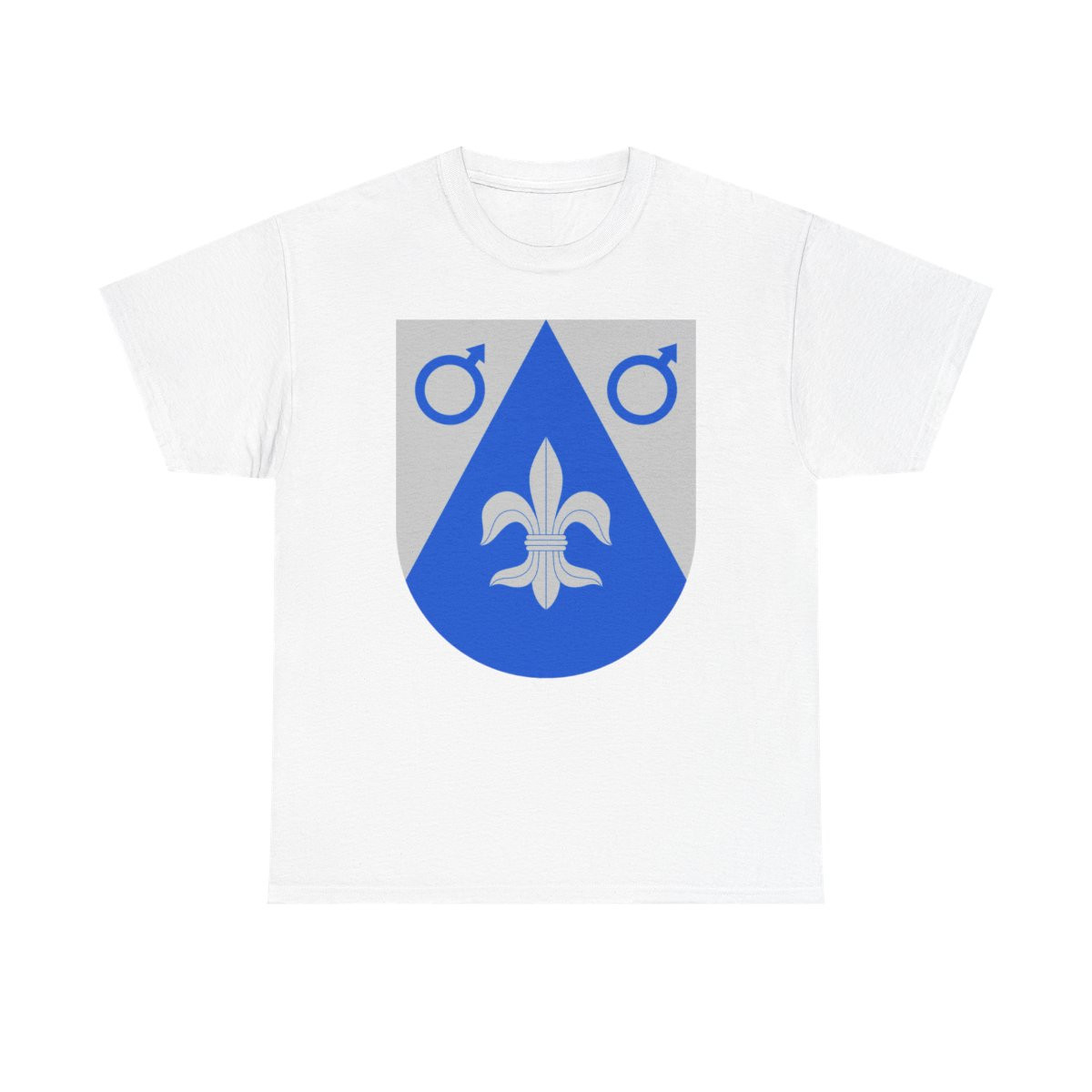
Pohja.vaakuna (Coat of Arms) T-Shirt: Design Overview
This t-shirt showcases the striking coat of arms of the former Finnish municipality of Pohja (Pojo). The design is a vibrant representation of the area's rich history and unique characteristics.
Visual Elements & Symbolism
The central element of the design is a silver (argent) shield, its base defined by a dynamic blue (azure) point. This blue triangle symbolizes Pohja's connection to the sea and its coastal location.
Within the blue point, a prominent silver fleur-de-lis, the stylized lily flower, takes center stage. This elegant symbol represents the 15th-century St. Mary's church, paying homage to the municipality's ecclesiastical heritage.
Flanking the blue point on either side are stylized blue iron-marks. These powerful symbols acknowledge Pohja's industrial past, representing the region's historical importance in metalworking and iron manufacturing, which dates back to the 17th century. The iron marks are a nod to the area's mining and metal industry.
Design Interpretation
The coat of arms, and by extension this t-shirt design, is a cohesive visual narrative. It masterfully combines elements representing Pohja's industrial prowess, its maritime identity, and its enduring connection to its religious past.
Same design, other garments
More like this
-
Heraldry
Kinnula coat of arms (Finland) (Coat of Arms)
from $19.99
T-Shirt
-
 Heraldry
Hattula.vaakuna (Finland) (Coat of Arms)
from $19.99
T-Shirt
-
 Heraldry
Imatra.vaakuna (Finland) (Coat of Arms)
from $19.99
T-Shirt
-
 Heraldry
Kerava.vaakuna (Finland) (Coat of Arms)
from $19.99
T-Shirt
-
 Heraldry
Urjala.vaakuna (Finland) (Coat of Arms)
from $19.99
T-Shirt