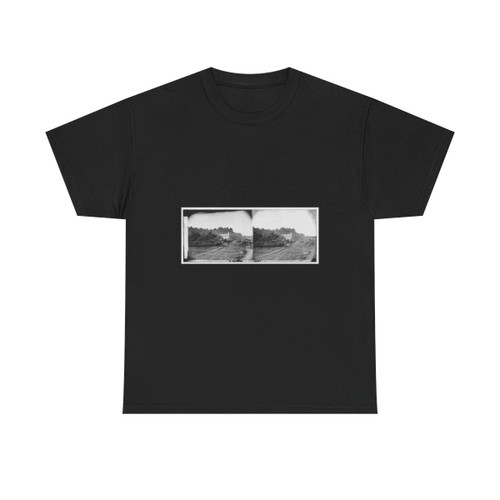
Rocketts, Richmond, Va. Confederate Brass Mountain Howitzers (U.S. Civil War) T-Shirt: Design Description
This t-shirt design presents a striking visual homage to a pivotal moment in American history: the end of the Civil War at Rocketts Landing in Richmond, Virginia. The artwork centers on the iconic "Confederate Brass Mountain Howitzers," the subject of historical photographs taken at the site. The design aims to capture the essence of this historical period and the tools of war that defined it.
Visual Elements
The central imagery likely depicts a detailed illustration or stylized representation of Confederate brass mountain howitzers. These small, portable artillery pieces are central to the visual narrative, hinting at the battlefield strategies and the harsh realities of the conflict. The artwork might feature the distinctive short barrels and brass construction, reflecting the historical context of metal scarcity during the war.
The design may also incorporate visual references to Rocketts Landing itself. This could involve subtle background elements, such as the shoreline of the James River, or representations of the docks or warehouses that were crucial to the Confederate war effort. A vintage aesthetic, perhaps through the use of sepia tones or a slightly distressed finish, would further enhance the historical accuracy and create a sense of the era.
Meaning and Symbolism
The overall design represents a moment of reflection on the Civil War's conclusion, focusing on the remnants of conflict. The howitzers serve as powerful symbols of the Confederate war machine, and their presence at Rocketts signifies both the logistical importance of the area and the ultimate surrender of Confederate forces. The design is a respectful nod to history rather than an endorsement of any particular ideology, inviting reflection on a complex and defining period in American history.
The artwork may also serve as a reminder of the industrial and logistical significance of Rocketts Landing during the war. It invites the wearer and observer to consider the tools of war, the individuals who used them, and the landscape upon which the conflict unfolded.