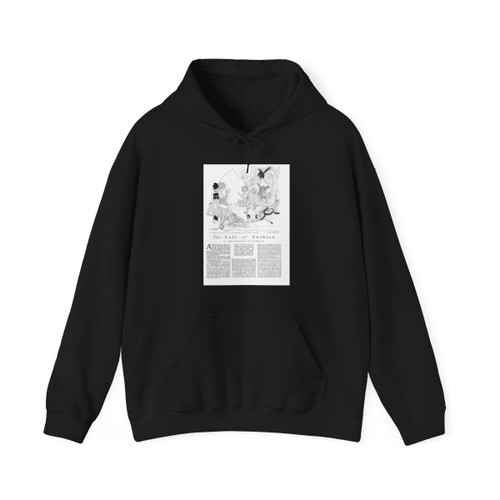
The Lighter Side of Dress - Harper's Bazaar, January 1915 Hoodie Design
This hoodie design captures the essence of "The Lighter Side of Dress," a feature originally published in the January 1915 issue of Harper's Bazaar. The artwork is a direct homage to the fashion illustrations common in early 20th-century magazines, showcasing the delicate line work and idealized figures characteristic of the era's aesthetic.
Visual Elements and Representation
The central element of the design is a stylized depiction of a woman, rendered in the fashion plate style of the time. She is presented in a relaxed pose, likely wearing a dress designed for the warmer climates or leisure activities described in the original feature. The illustration's focus on flowing lines and softer forms directly references the "lighter" nature of the garments, contrasting with more structured styles common at the time.
Subtle details within the illustration, such as the woman's hat and accessories, provide context for the era, hinting at a "sojourner in the south" or a woman embracing travel and a more relaxed lifestyle. These visual cues evoke the sense of freedom and informality associated with the feature. The design seeks to transport the wearer to a moment in fashion history, when style was a statement of elegance and a reflection of a changing world.
Meaning and Symbolism
The design represents a celebration of a specific moment in fashion history, a time when clothes started to become more practical. It speaks of a departure from more formal attire toward the simplicity and ease of wear associated with travel, leisure, and the warmer climates for which these lighter dresses were intended. The artwork is an invitation to explore the past, to embrace an aesthetic that embodies effortless sophistication, and to carry a piece of history on the go.
The visual style itself is symbolic of a particular era, an epoch of artistic expression and sartorial innovation. It's a testament to the influence of art and design on daily life, as well as a representation of women's evolving roles and the shifting landscape of fashion.