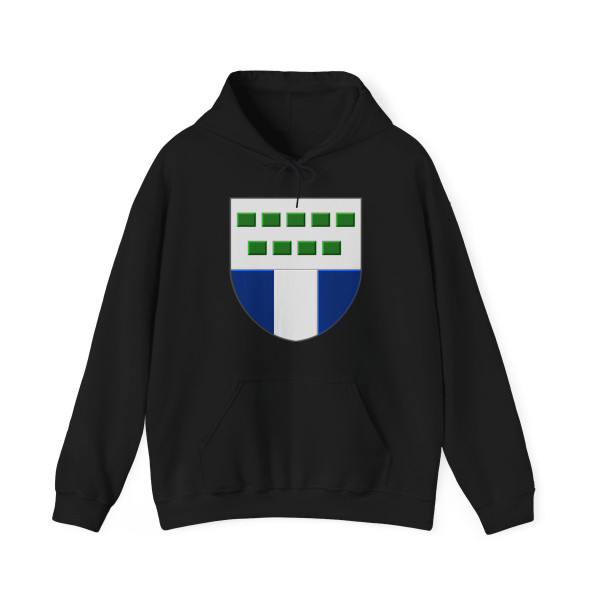
Wapen Benthuizen (Netherlands) (Coat of Arms) Hoodie - Design Description
This hoodie showcases the historical coat of arms of Benthuizen, a former municipality in South Holland, Netherlands. The design is a bold and striking representation of the village's heritage.
The Shield: A Divided Heritage
The primary visual element is the shield, divided horizontally into two equal halves. The top half is rendered in a bright white (Argent), while the bottom half is a vibrant red (Gules). This division, known as "Per fess" in heraldry, signifies a balanced composition.
The Billets: A Symbol of Lineage
Across the shield, nine rectangular blocks, known as billets, are meticulously arranged in three rows of three. These billets are "counterchanged," meaning their colors alternate between the two halves. In the white (Argent) portion, the billets are red (Gules), and in the red (Gules) portion, the billets are white (Argent). This unique arrangement pays homage to the Oem van Wijngaarden family, former lords of Benthuizen, whose coat of arms featured nine turfs, the visual inspiration for these billets.
Meaning and Symbolism
The design speaks volumes. The nine billets directly link the design to the local history, specifically the Oem van Wijngaarden family. The counterchanged arrangement, with the reversed colors, symbolizes the union or intertwining of various noble lineages. This coat of arms, granted in 1817, serves as a lasting visual testament to Benthuizen's unique identity and historical connections.