


 Heraldry
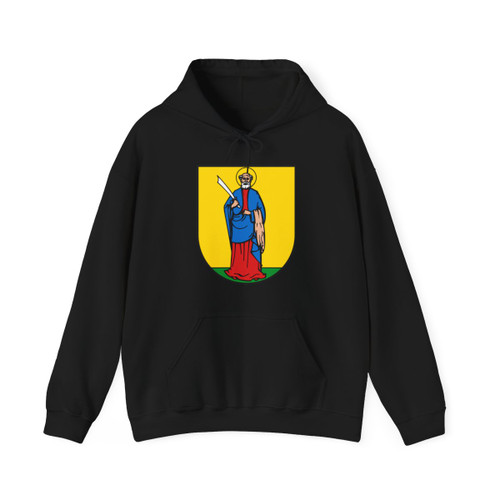
Wappen Markranstaedt (Germany) (Coat of Arms)
from $27.99
Hoodie

Heraldry
Wappen Markranstaedt (Germany) (Coat of Arms)
Garment
T-Shirt
from $19.99
Ships within 3–7 business days. Free shipping to U.S. addresses.
Bulk offer: any 3 items 10% off, 5 items 20%, 10 items 30%. Applied automatically in the cart.
- Free shipping on all U.S. orders. Flat-rate international shipping: $19.99 USD.
- Made to order. Orders are processed and shipped within 3–7 business days.
- Damaged or misprinted? Free replacement. Report it within 30 days of delivery. Refund & return policy
- Material
- Solid colors: 100% cotton. Heather/Tweed/Russet: 50% cotton, 50% polyester. Sport Grey/Antique: 90% cotton, 10% polyester.
- Production
- Printed using Direct-to-Garment (DTG) technology for vibrant, lasting designs.
- Origin
- Printed in the USA on imported garments (Nicaragua).
About this design
Wappen Markranstädt (Germany) T-Shirt Design
This striking design presents the historic coat of arms of Markranstädt, a town nestled in the Leipzig district of Saxony, Germany. The central focus is a vibrant golden shield, beautifully contrasted by a rich green base.
A Heraldic Portrait
At the heart of the design stands Saint Bartholomew, rendered in the traditional heraldic style. The saint is clad in a flowing red robe, which signifies martyrdom, and a blue mantle, often associated with divinity and heaven. He is depicted in a commanding pose, clutching a silver knife in his right hand. The knife is a key symbol of Saint Bartholomew, representing his method of martyrdom. In his left arm, he holds a piece of skin, a further visual reference to his story.
Symbolism and History
The presence of Saint Bartholomew is no accident. He is the patron saint of furriers, and his inclusion directly references Markranstädt's significant historical ties to the fur trade. The coat of arms, a symbol of civic pride and identity, visually commemorates the town's heritage, reflecting its economic and cultural roots. The design is a powerful reminder of the town’s long and rich history, dating back to at least the 16th century.
Same design, other garments
More like this
-
Heraldry
Wappen Markranstaedt (Germany) (Coat of Arms)
from $27.99
Hoodie
-
 Heraldry
Wappen Triebel (Germany) (Coat of Arms)
from $19.99
T-Shirt
-
 Heraldry
Wappen Vogtlandkreis (Germany) (Coat of Arms)
from $19.99
T-Shirt
-
 Heraldry
Wappen Michelstadt (Germany) (Coat of Arms)
from $19.99
T-Shirt
-
 Heraldry
Wappen Messel (Germany) (Coat of Arms)
from $19.99
T-Shirt