


 Heraldry
Wappen Nidwalden matt (Switzerland) (Coat of Arms)
from $27.99
Hoodie

Heraldry
Wappen Nidwalden matt (Switzerland) (Coat of Arms)
Garment
T-Shirt
from $19.99
Ships within 3–7 business days. Free shipping to U.S. addresses.
Bulk offer: any 3 items 10% off, 5 items 20%, 10 items 30%. Applied automatically in the cart.
- Free shipping on all U.S. orders. Flat-rate international shipping: $19.99 USD.
- Made to order. Orders are processed and shipped within 3–7 business days.
- Damaged or misprinted? Free replacement. Report it within 30 days of delivery. Refund & return policy
- Material
- Solid colors: 100% cotton. Heather/Tweed/Russet: 50% cotton, 50% polyester. Sport Grey/Antique: 90% cotton, 10% polyester.
- Production
- Printed using Direct-to-Garment (DTG) technology for vibrant, lasting designs.
- Origin
- Printed in the USA on imported garments (Nicaragua).
About this design
Wappen Nidwalden matt (Switzerland) T-Shirt: Design Description
This t-shirt features the iconic coat of arms of Nidwalden, Switzerland, in a matte design. The artwork presents a classic heraldic representation, emphasizing the visual elements of the canton's official emblem.
Visual Elements
The design showcases a striking contrast: a single, upright double key, rendered in silver (white), centrally positioned against a vibrant red field. The "matt" finish ensures a flat, non-glossy appearance, providing a clean and understated aesthetic.
Meaning and Symbolism
The double key is the central symbol of Nidwalden's coat of arms. It represents Saint Peter, the patron saint of the region. The key, a potent symbol of authority and access, has a rich historical significance, appearing in seals of Nidwalden since the 14th century. The simple yet powerful design speaks to the region's heritage and its connection to its patron saint.
The current graphic form is a modern rendition of this historical symbol, created around 1944 by Louis Ruckli.
Same design, other garments
More like this
-
Heraldry
Wappen Nidwalden matt (Switzerland) (Coat of Arms)
from $27.99
Hoodie
-
 Heraldry
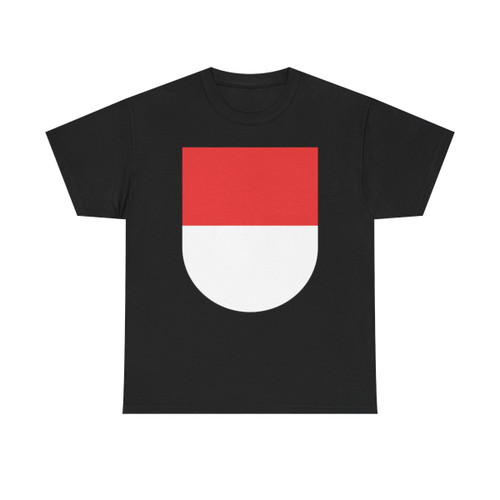
Wappen Solothurn matt (Switzerland) (Coat of Arms)
from $19.99
T-Shirt
-
 Heraldry
Wappen Luzern matt (Switzerland) (Coat of Arms)
from $19.99
T-Shirt
-
 Heraldry
Wappen Uri matt (Switzerland) (Coat of Arms)
from $19.99
T-Shirt
-
 Heraldry
Wappen Schwyz matt (Switzerland) (Coat of Arms)
from $19.99
T-Shirt