World Map (1957) Hoodie - Design Description
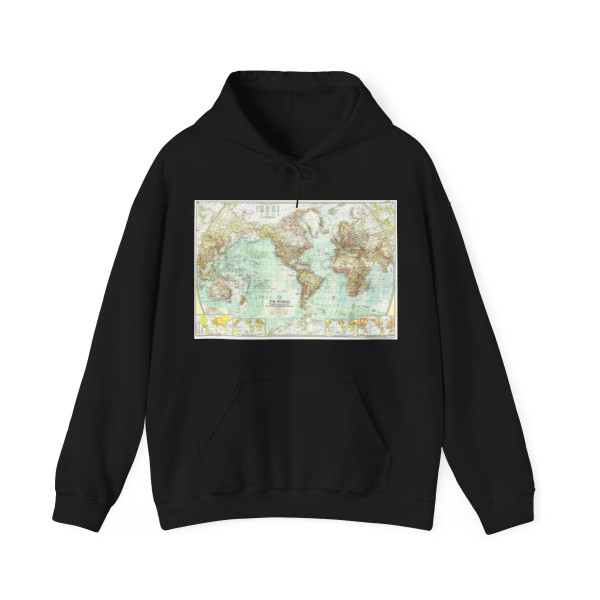
This hoodie showcases a detailed representation of the world as it existed in 1957, a snapshot of a pivotal moment in history. The primary visual element is a meticulously rendered world map, a cartographic journey back to the height of the Cold War and the accelerating era of decolonization.
Geopolitical Divisions
The design prominently displays the stark geopolitical divisions of the time. The landscape is colored to illustrate the prominent Western and Eastern blocs, representing the ideological battleground of the Cold War. You'll see the contours of nations aligned with the USA and NATO juxtaposed against those under the Soviet Union's influence.
Colonial Legacies
A key aspect of this design is its depiction of colonial territories. The map reveals the vestiges of European empires across Africa, Asia, and the Caribbean. The continued presence of colonial powers serves as a visual reminder of the ongoing struggle for independence that was transforming the global landscape.
Emerging Nations and Historical Significance
The map highlights newly independent nations, offering a glimpse of a world in transition. The inclusion of these newly formed countries signifies the rise of self-determination and the reshaping of national borders. This 1957 map isn't just an image of the world; it is a visual testament to the momentous shifts of the era.
Physical World Elements
Beyond political borders, the design incorporates standard geographical features. Mountain ranges, rivers, deserts, and oceans are meticulously rendered. Depending on the design adaptation, topographic shading may be included to provide a sense of the Earth's physical relief, providing a holistic understanding of the world.
Symbolism and Meaning
The World Map (1957) design is more than just a map; it's a symbol of a world shaped by ideological conflict and the pursuit of national sovereignty. It represents the historical context of the Cold War, the dawn of the Space Race, and the sweeping transformations reshaping the global order. It is an invitation to reflect on the past and consider the evolution of the world we live in today.