Weerselo Wapen 1898 (Netherlands) Hoodie Design
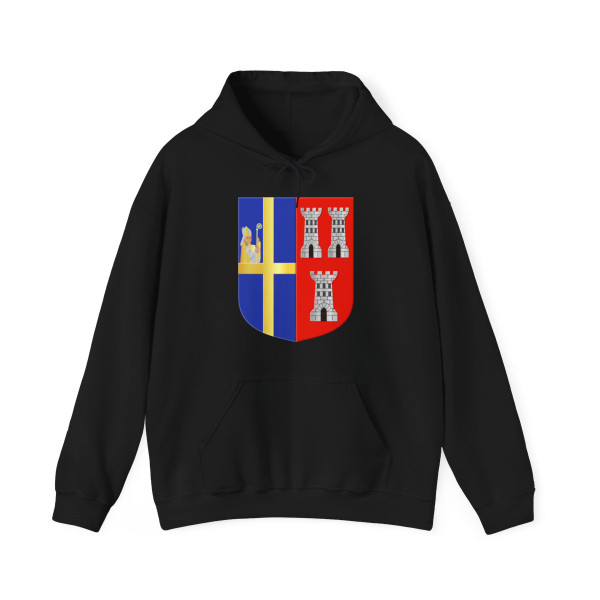
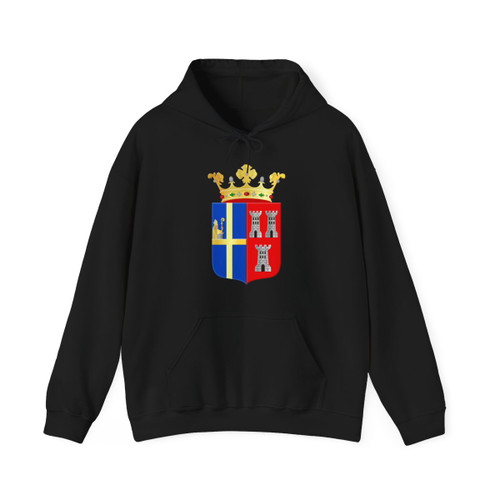
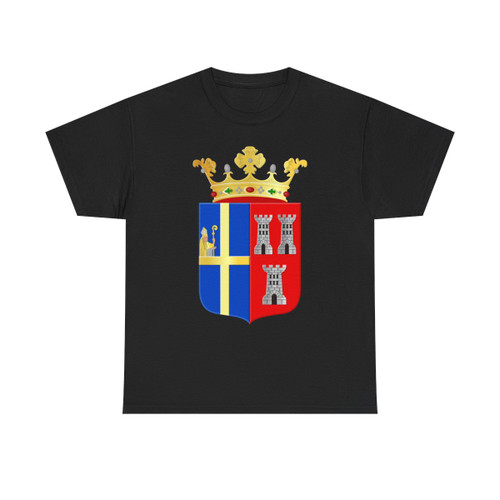
This hoodie showcases the official coat of arms of Weerselo, a former municipality in Overijssel, Netherlands, as it was designed and adopted in 1898. The design is a striking display of heraldic tradition, divided into two distinct halves, each rich in symbolic meaning.
Left Half: Ecclesiastical Authority
The left side of the design features a blue field, upon which rests a prominent gold cross, a classic Christian symbol representing faith and possibly ecclesiastical authority. Within the upper left quarter, emerging from the right arm of the cross, is a half-figure of a bishop. This bishop figure, rendered in natural tones, wears a gold and silver mitre and vestments and holds a golden bishop's crozier. This element directly references the historical influence of the Benedictine monastery, or Stiftkerk, which played a significant role in Weerselo's history.
Right Half: The Hunenborg Fortification
The right half of the shield presents a red field. Upon this vibrant background, three silver (white) castles are prominently displayed. Each castle is intricately detailed with black elements, including their gates. These castles are a direct representation of the Hunenborg, a historic fortification or stronghold in the Weerselo area, acting as a powerful symbol of the region's heritage.
Overall Composition
The design effectively balances the religious significance of the monastery with the historical importance of the Hunenborg. The gold cross and the bishop figure in the first quarter, representing the past ecclesiastical power, are perfectly balanced by the silver castles which stands for the area’s historic stronghold. This coat of arms encapsulates the rich history and heritage of Weerselo, visualized in a striking and historically significant manner.